How to say it · Out and about

Explaining what went wrong

Your bag didn't arrive, or the drill you borrowed broke in your hands. You need to explain what happened, and be honest about how much of it was your fault.

6 ways to say it
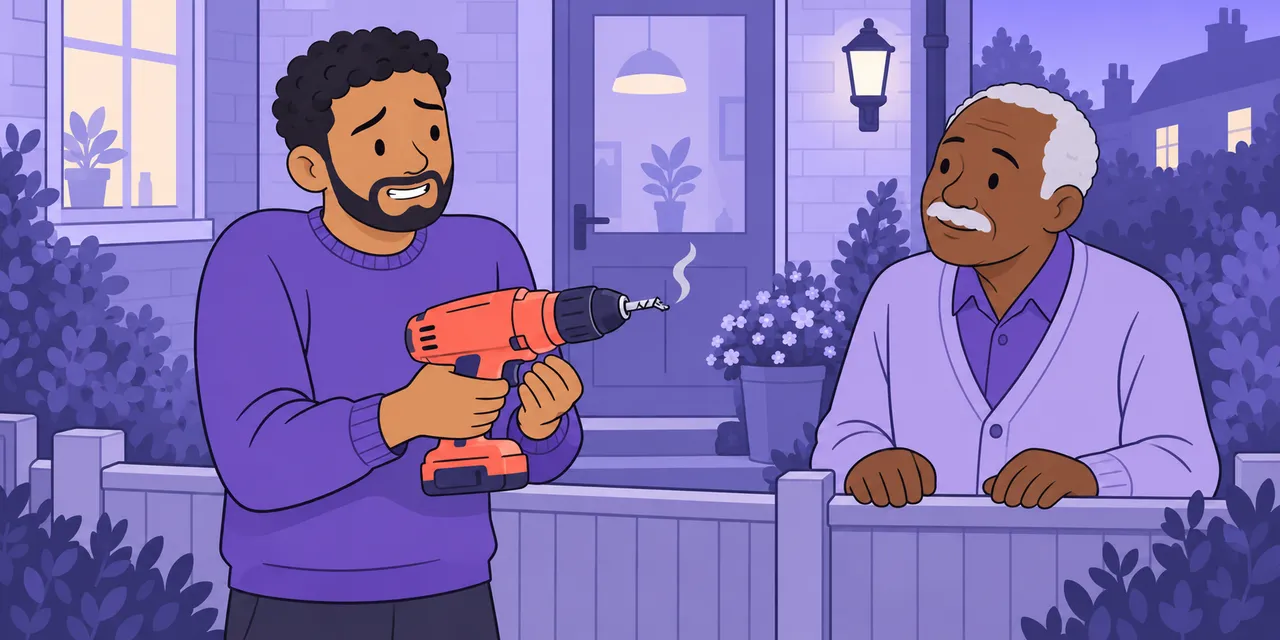
Over a garden fence, Sam winces as he hands his older neighbour a drill with a snapped bit and a puff of smoke.
How much you own itFactualApologetic

Way 1 · best default

What happened was

Starts the story in order, step by step, without blaming anyone yet.

How much you own itFactual
ToneNeutral
Use itAnywhere

Examples

What happened was, I was halfway through a hole and it just stopped.

So what happened was, my first flight landed late and I missed the connection.

In a conversation

A: So how did the drill break?
B: What happened was, it started smelling of burning and then it wouldn't turn on.
Next: It turns out

Way 2 · found out later

It turns out

For a fact you only learned afterwards, often something that wasn't your fault.

How much you own itVery factual
ToneNeutral
Use itAnywhere

Examples

It turns out my bag never left Frankfurt.

It turns out the drill's had the same problem before.

In a conversation

A: Did they find your suitcase?
B: Sort of. It turns out it went to Madrid instead.

Next: I'm not sure what happened, but

Way 3 · facts, no guessing

I'm not sure what happened, but

Honest when you don't know the cause. You give the facts and let them decide.

How much you own itFactual
ToneNeutral
Use itAnywhere

Examples

I'm not sure what happened, but my suitcase didn't come through on the belt.

I'm not sure what happened, but it won't start any more.

Next: I think I might have

Way 4 · probably my fault

I think I might have

You suspect it was you but aren't certain. Honest, and softer than saying it was definitely you.

How much you own itMiddle
ToneNeutral
Use itAnywhere

Examples

Sorry, I think I might have taken your keys by mistake.

I think I might have left the charger at the hotel.

Next: I'm afraid I've

Way 5 · bad news, owned

I'm afraid I've

Warns them bad news is coming, and says clearly that you did it.

How much you own itApologetic
ToneNeutral
Use itAnywhere

Examples

I'm afraid I've scratched your car door. I'm so sorry.

I'm afraid I've lost one of the bits from your screwdriver set.

In a conversation

A: Hiya. You all right?
B: Yeah. I'm afraid I've lost one of the bits from your screwdriver set. I'll get you a new one.

Common mistake

Not: I am sorry for breaking your drill. I will compensate you.

Say: I'm afraid I've had a problem with your drill. Let's work out what to do.

"Compensate" sounds like a lawyer. With a neighbour, use everyday words and offer to sort it out together.

Next: It's my fault

Way 6 · fully owned

It's my fault

No excuses: you caused it, and you say so. People usually soften when they hear it.

How much you own itVery apologetic
ToneNeutral
Use itAnywhere

Examples

Honestly, it's my fault. I forgot to send the file.

It's my fault we missed the train, not yours.

Common mistake

Not: Sorry, I'm wrong. I broke it.

Say: Sorry, it's my fault. I broke it.

"I'm wrong" is about facts or opinions. When you caused a problem, say "it's my fault".

Test yourself: which would you say?
Pick the right one

Which would you say?

Read the moment, then choose the way that fits it best.

Now say it out loud

Pick one and practise it in a real conversation. Save the ones you want to remember.