Home & neighbours · On your next-door neighbour's doorstep
How to discuss damage to a borrowed tool in English
Telling a neighbour you've damaged something they lent you can feel awkward, especially when money comes up. You'll find natural phrases to explain, apologise and discuss what to do next.
The situation
What happened
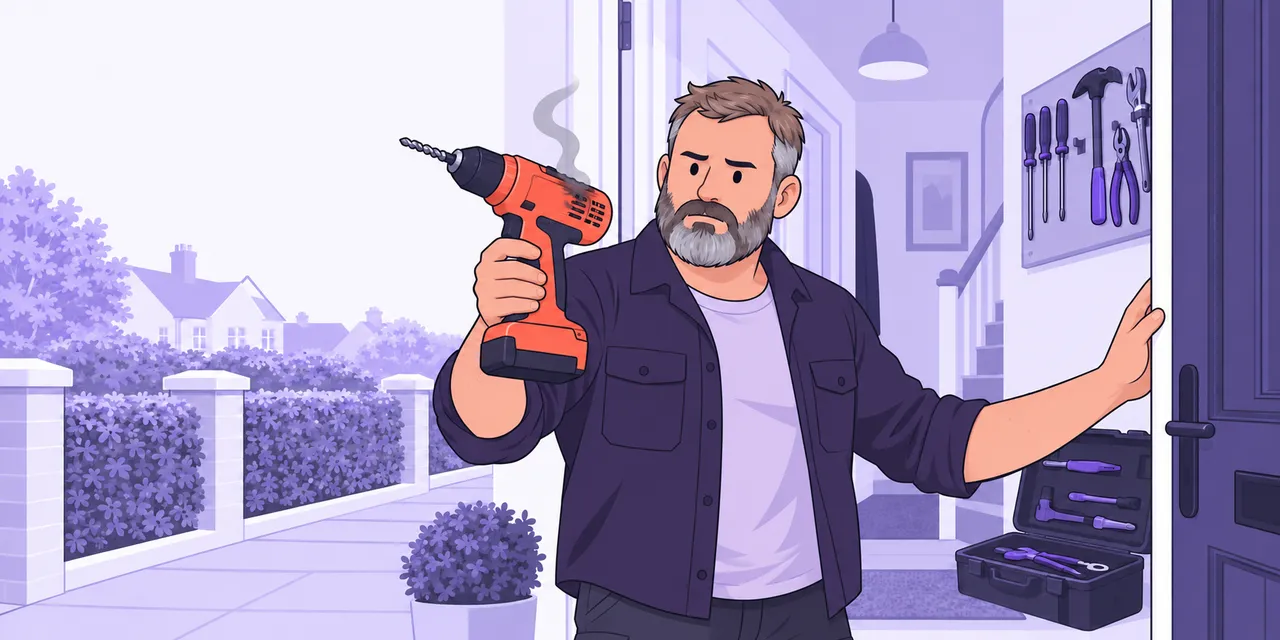
- You borrowed your neighbour's cordless drill on Saturday to put up some shelves.
- Halfway through the second hole, it made a burning smell and stopped.
- It still won't turn on.
- It's a good make but about six years old, and a new one costs around £120.
Your goal
Pay £45 at most, and stay on good terms with Owen.
What to say
8 lines, in the order you'd need them
Say each line out loud from its hint, then tap to check.
-
1 · Open
A calm way to introduce bad news
“Hi, have you got a minute? There's a problem with the drill.”
-
2 · Explain
Gives the facts without guessing at the cause
“I was halfway through a hole when it smelled of burning and wouldn't start again.”
“I've tried it again today, but it's still not turning on.”
-
3 · Ask
Invites useful background without blaming anyone
“Do you know if it's had any trouble like this before?”
-
4 · Push back
Acknowledges their feelings before disagreeing
“I get why you're upset, but it might be repairable.”
-
5 · Meet halfway
Suggests a practical next step
“Let's see what the repair shop says before we decide what to do.”
Shows responsibility without sounding formal
“I'm happy to help with a reasonable repair cost.”
-
6 · Wrap up
Closes with a clear offer
“I'll take it to the repair shop and let you know what they say.”
Say it like a local
Drop the stiff version
Learners sayI am sorry for breaking your drill. I will compensate you.
Locals sayI'm really sorry. It stopped while I was using it, so let's work out what to do.
It sounds personal and cooperative, rather than formal or legal.
Listen in
The same kind of moment, smaller
The highlighted phrases are the ones worth stealing.
 Owen · your next-door neighbouris waiting for you
Now say it out loud
Owen answers what you actually say, and the mood shifts with every line. Get what you came for, then hear how a local would have said each of yours.
Free with an account · 7 conversations a week