Meaning trap
get off
derive pleasure
To experience strong enjoyment, excitement, or satisfaction from something, often used informally and sometimes with a mildly sexual or taboo connotation.
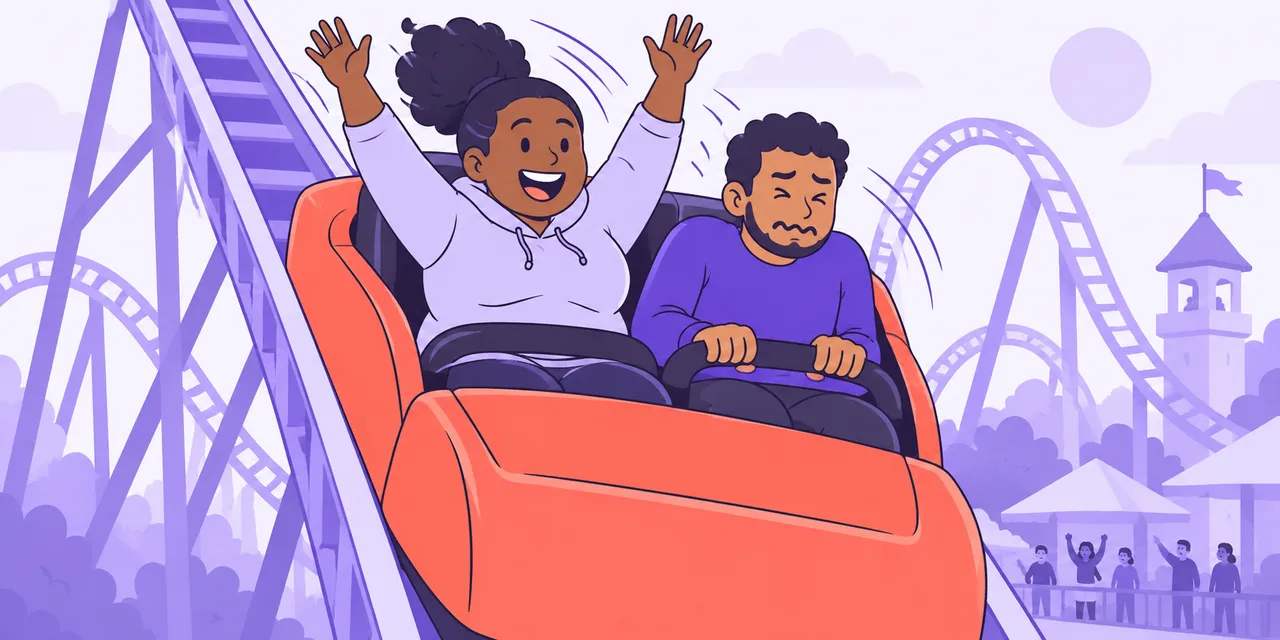
Don't mix these meanings
Same phrase, different job.
To experience strong enjoyment, excitement, or satisfaction from something, often used informally and sometimes with a mildly sexual or taboo connotation.
'get off' also has the more basic meaning 'leave a bus, train, plane, etc.'; this is the advanced sense.
Hear it in context
Notice where the phrase sounds natural.
Some people really get off on taking risks, even when there's a lot at stake.
While some individuals get off on the thrill of extreme sports, others prefer more conventional hobbies for relaxation.
Fix the pattern
One small grammar move makes it sound right.
Not: She gets off with bossing people around.
Say: She gets off on bossing people around.
For getting a thrill from something, it's 'get off ON' — 'get off with' is a different (BrE) sense.
Which sounds natural?
Tap the one a native speaker would say.
'Get off on' is the slangy phrase for getting a kick out of something (often disapproving); the formal version is detached.
Build natural chunks
Words that usually travel with it.
get off on + thing
- on power
- on it
- on the attention
- on winning
Don't confuse it
Related
Other meanings and phrases to compare.
- get off (leave a bus, train, plane, etc.) — 'get off' also has the more basic meaning 'leave a bus, train, plane, etc.'; this is the advanced sense.