Meaning trap
get off
leave a bus, train, plane, etc.
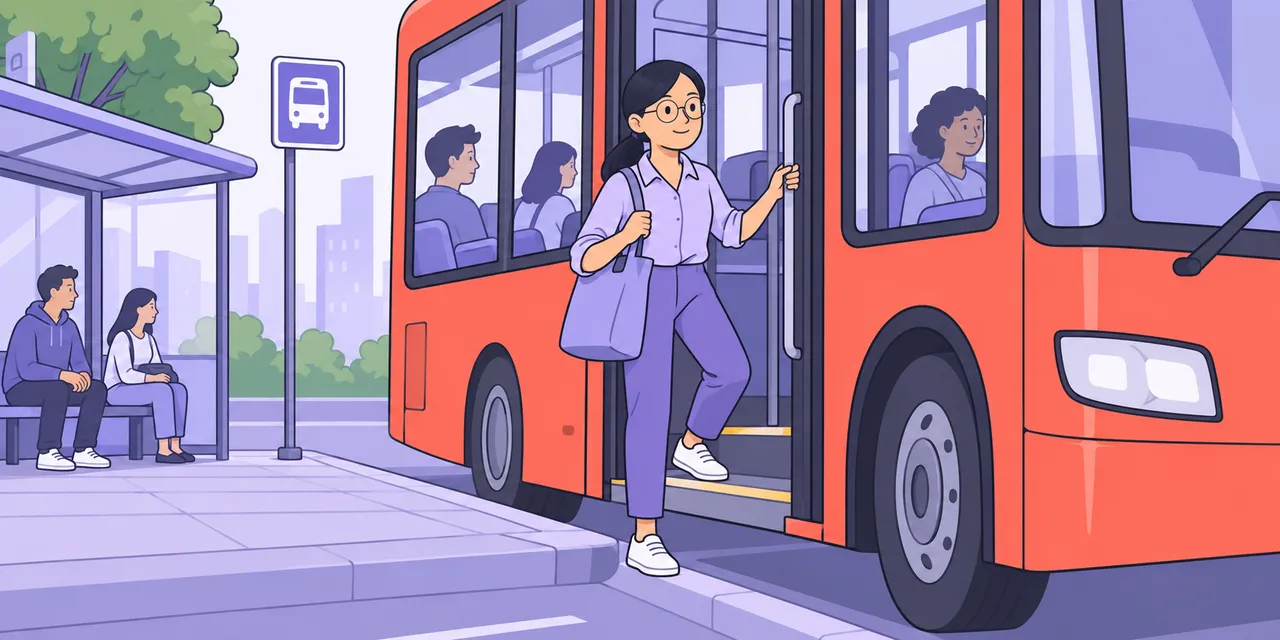
To leave or step out of a bus, train, plane, or other form of public transport.
Don't mix these meanings
Same phrase, different job.
To leave or step out of a bus, train, plane, or other form of public transport.
Another meaning of 'get off' is 'finish work or leave work for the day'; compare the examples to keep the meanings separate.
Hear it in context
Notice where the phrase sounds natural.
I usually get off the bus at the next stop.
When I travel to university, I get off the train at Central Station and walk the rest of the way.
Fix the pattern
One small grammar move makes it sound right.
Not: I got off from the train at noon.
Say: I got off the train at noon.
'Get off' takes the vehicle directly — no 'from'.
Which sounds natural?
Tap the one a native speaker would say.
'Get off' is the everyday verb for leaving a bus or train; 'disembark' is an airline announcement.
Build natural chunks
Words that usually travel with it.
get off + transport
- the bus
- the train
- at the next stop
- here
Don't confuse it
Related
Other meanings and phrases to compare.
- get off (finish work or leave work for the day) — Another meaning of 'get off' is 'finish work or leave work for the day'; compare the examples to keep the meanings separate.