How to say it · Speaking moves

Telling a story

You're telling a friend, or an examiner, about something that happened. Without a few signposts, even a funny story comes out flat: this, then this, then this.

6 ways to say it
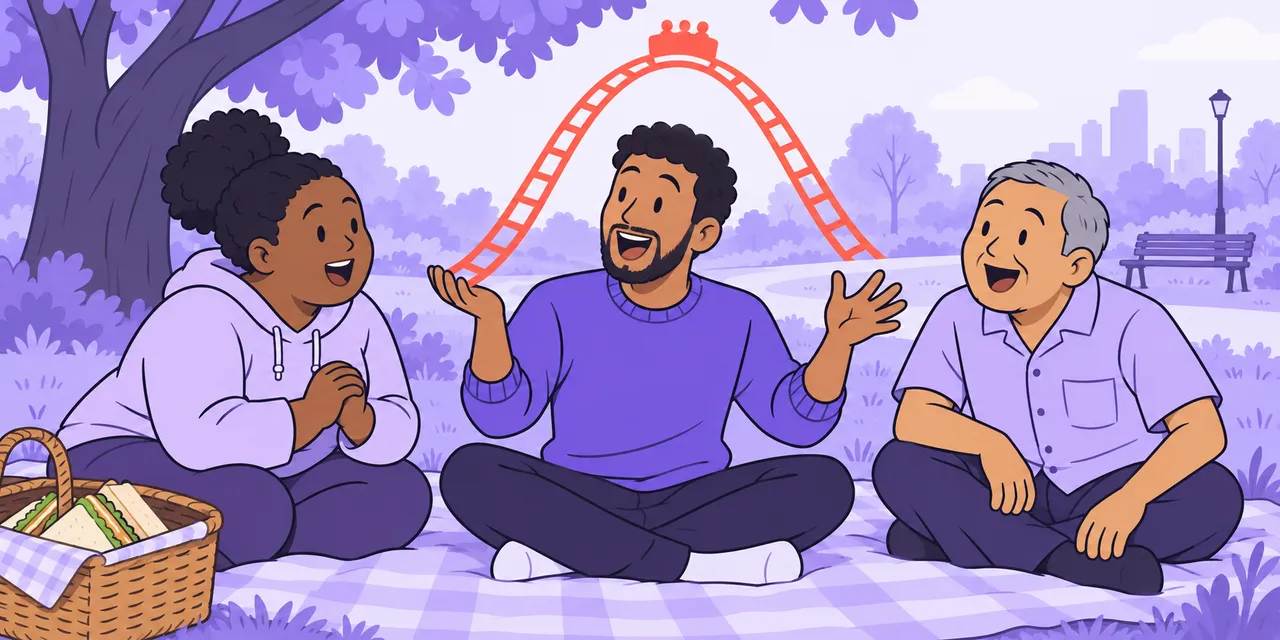
On a picnic blanket in the park, Sam tells a story to two friends, a rollercoaster track rising above him.
Story stageEarlyLate

Way 1 · best default

So, the other day

The classic way to start. It tells people a story is coming and sets the time without being exact.

Story stageEarly
ToneCasual
Use itAnywhere

Examples

So, the other day I was waiting for the bus and this dog just sat on my foot.

So, the other day my mum tried to video call me from the cinema.

In a conversation

A: Describe a time you got lost.
B: So, the other day I was trying to find a friend's new flat, and my phone died on the way.

Common mistake

Not: Last week I go to the beach. I swim. I eat. I go home.

Say: So, the other day I went to the beach, and something weird happened.

A list of actions isn't a story yet. Open with a signpost, use the past tense, and promise something is coming.
Next: You'll never guess what happened

Way 2 · hook first

You'll never guess what happened

Said before the story even starts. It makes people lean in and want to hear more.

Story stageVery early
ToneCasual
Use itWith friends

Examples

You'll never guess what happened at work today.

Oh my goodness, you'll never guess what happened on the train.

In a conversation

A: Hey, how was the wedding?
B: You'll never guess what happened. The groom forgot the rings!

Next: So there I was

Way 3 · setting the scene

So there I was

You stop and paint the picture just before things go wrong. It builds a little suspense.

Story stageMiddle
ToneCasual
Use itWith friends

Examples

So there I was, standing in the rain with no keys and no phone.

So there I was at the front of the queue, and my card didn't work.

Next: And then out of nowhere

Way 4 · the twist

And then out of nowhere

Marks the sudden moment, the surprise that turns the story. Slow down a bit when you say it.

Story stageLate
ToneCasual
Use itAnywhere

Examples

We were just eating our picnic, and then out of nowhere it started to hail.

And then out of nowhere, this guy jumps on stage and starts singing.

In a conversation

A: So what happened on the hike?
B: It was lovely and quiet, and then out of nowhere a huge cow walked across the path.

Next: Anyway, long story short

Way 5 · skip ahead

Anyway, long story short

You cut the boring middle and jump to the ending. Useful when you notice you're going on too long.

Story stageLate
ToneCasual
Use itAnywhere

Examples

Anyway, long story short, we missed the last train and walked home.

Anyway, long story short, I got the job.

Common mistake

Not: And then, and then, and then we finally got home.

Say: Anyway, long story short, we finally got home.

Repeating "and then" makes every part sound equally important. This phrase lets you skip to the part that matters.

Next: The funny thing was

Way 6 · the punchline

The funny thing was

Points at the best bit, the part you really wanted to tell. Often comes right at the end.

Story stageVery late
ToneCasual
Use itAnywhere

Examples

The funny thing was, he'd had my umbrella the whole time.

The funny thing was, nobody noticed I was wearing two different shoes.

In a conversation

A: So you never found your keys?
B: No, I did! The funny thing was, they were in the fridge.

Test yourself: which would you say?
Pick the right one

Which would you say?

Read the moment, then choose the way that fits it best.

Now say it out loud

Pick one and practise it in a real conversation. Save the ones you want to remember.