How to say it · Speaking moves

When you don't know the word

You're in the middle of a sentence and the English word just isn't there. Instead of stopping, you talk your way around it.

6 ways to say it
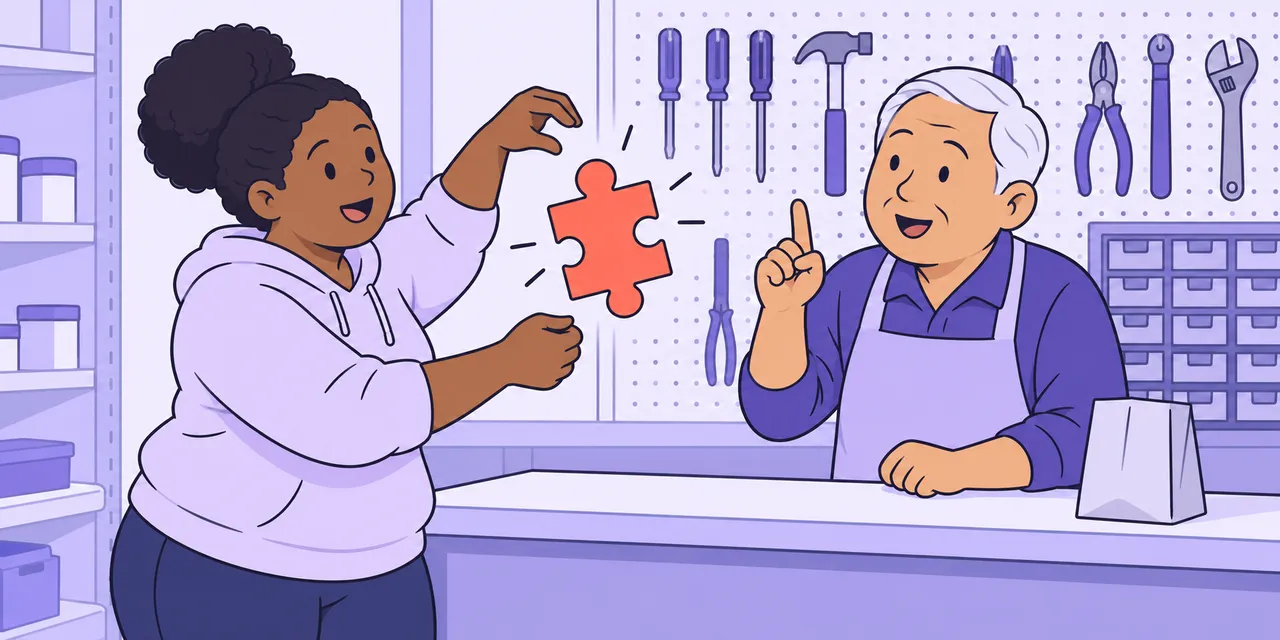
At a hardware shop counter, Mia mimes a tool to the shopkeeper while holding up a jigsaw piece.
How far offCloseFar

Way 1 · best default

It's a kind of

You know what group it belongs to, so you name the group and add one detail.

How far offMiddle
ToneNeutral
Use itAnywhere

Examples

It's a kind of pancake, but crispy, with prawns inside.

It's a kind of long silk dress that women wear for Tet.

In a conversation

A: What did you have for dinner?
B: Banh xeo. It's a kind of crispy pancake. You wrap it in lettuce.

Common mistake

Not: I don't know how to say it in English.

Say: It's a kind of sweet bread, a bit like a bun.

Stopping there leaves a silence. Describe it instead: what kind of thing it is, what it's like, what it's for.
Next: The thing you use to

Way 2 · say what it does

The thing you use to

You have no idea of the name, but you know what it's for. People usually guess the word for you.

How far offFar
ToneCasual
Use itAnywhere

Examples

Have you got the thing you use to open wine bottles?

I need one of those... the thing you use to hang washing on the line.

In a conversation

A: Can I help you?
B: Yes, I'm looking for the thing you use to clean between your teeth.
A: Oh, dental floss? Second shelf.

Common mistake

Not: The thing you use for open the door.

Say: The thing you use to open the door.

Say "use to + verb" (use to open) or "use for + -ing" (use for opening). Not "use for open".

Next: It's like a

Way 3 · compare it

It's like a

You can't name it, so you compare it to something people know, then say how it's different.

How far offFar
ToneNeutral
Use itAnywhere

Examples

It's like a big orange, but the skin is green and thick.

It's like a motorbike taxi, but you book it on an app.

Common mistake

Not: It's same like a lemon, but bigger.

Say: It's like a lemon, but bigger.

Say "like a" or "the same as". "Same like" is a very common slip, so drop the "same".

Next: What's it called?

Way 4 · ask for help

What's it called?

You invite the other person to find the word with you. Fluent speakers say this all the time.

How far offClose
ToneCasual
Use itWith friends

Examples

We went to that... what's it called? The big indoor market.

I left it in the... what's it called? The little space under the stairs.

In a conversation

A: So where did you go?
B: To the, er, what's it called? The place where they keep old paintings.
A: A gallery?

Next: It's on the tip of my tongue

Way 5 · almost got it

It's on the tip of my tongue

You know the word, you just can't remember it this second. It'll come back.

How far offVery close
ToneCasual
Use itAnywhere

Examples

Hang on, it's on the tip of my tongue... parasol! That's the word.

Her name? It's on the tip of my tongue. It starts with an M.

Next: I'm not sure what it's called in English, but

Way 6 · no English word

I'm not sure what it's called in English, but

Honest, and it keeps you talking. Good for local food, festivals and things with no English name.

How far offVery far
ToneNeutral
Use itAnywhere

Examples

I'm not sure what it's called in English, but it's a fried roll with pork inside.

We play a game, I'm not sure what it's called in English, but you kick a feather.

Common mistake

Not: It's something greasy... I don't know what it is in English.

Say: I'm not sure what it's called in English, but it's a fried dough stick.

Saying you don't know the word is fine. Just put it first, add "but", and keep describing.

Test yourself: which would you say?
Pick the right one

Which would you say?

Read the moment, then choose the way that fits it best.

Now say it out loud

Pick one and practise it in a real conversation. Save the ones you want to remember.