How to say it · Plans, time and sorry

Saying sorry properly

You got something wrong and you know it. A good apology matches the size of the mistake and owns it, with no excuse tacked on the end.

6 ways to say it
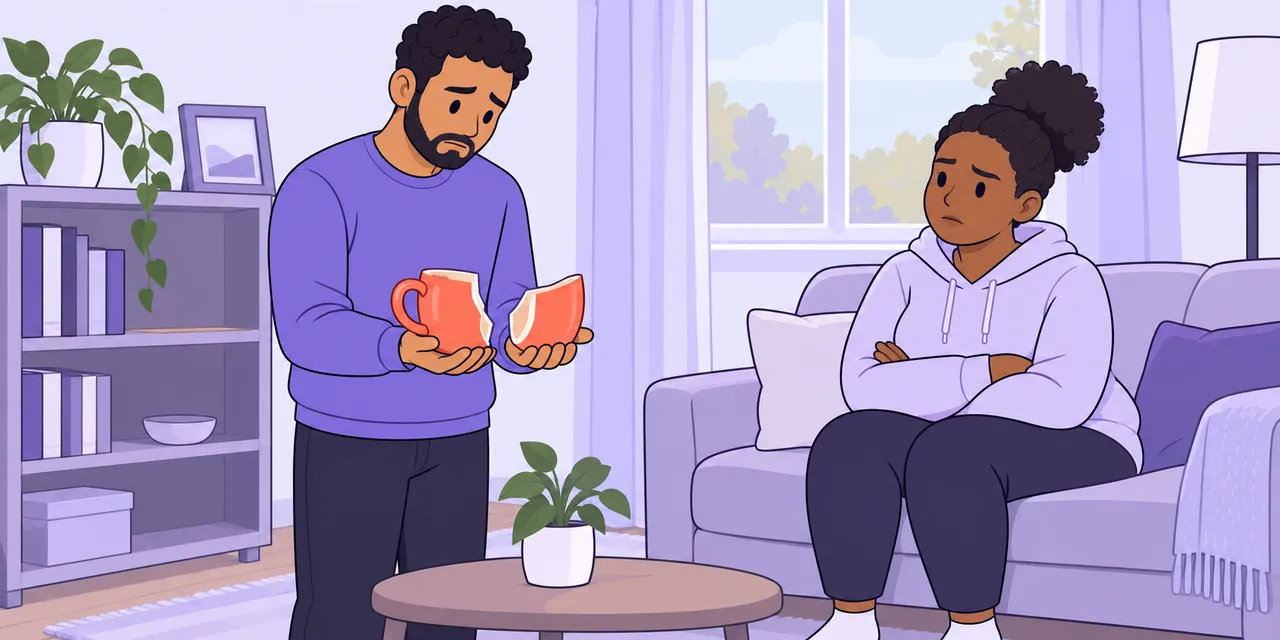
In a living room, Sam holds out the two halves of a broken mug to Mia, who sits with her arms folded.
How seriousLightSerious

Way 1 · best default

I'm really sorry

A clear, sincere apology. "Really" shows you mean it. Fine with anyone, for most mistakes.

How seriousMiddle
ToneNeutral
Use itAnywhere

Examples

I'm really sorry, I didn't see you there.

I'm really sorry about yesterday. I was in a terrible mood.

In a conversation

A: Ow, that was my foot!
B: Oh no, I'm really sorry. Are you OK?

Common mistake

Not: My bad, I deleted the client's file.

Say: I'm really sorry, I deleted the client's file.

"My bad" is for tiny slips with friends. For a real problem at work, it sounds like you don't care.
Next: My bad

Way 2 · tiny slip

My bad

A quick, light "oops, that was me" for small things that don't really matter.

How seriousVery light
ToneCasual
Use itWith friends

Examples

My bad, I thought you said seven, not eight.

Oh, that's your seat? My bad.

In a conversation

A: You've taken my charger again.
B: My bad! Here you go.

Next: That's on me

Way 3 · own it

That's on me

You take the blame yourself, so nobody else has to. Short, calm and grown-up.

How seriousLight
ToneNeutral
Use itAt work

Examples

The numbers were wrong, and that's on me. I'll fix them today.

We missed the train because I misread the time. That's on me.

Next: I shouldn't have said that

Way 4 · taking words back

I shouldn't have said that

You admit something you said was unkind or unfair. Often said straight after, when you see their face.

How seriousSerious
ToneNeutral
Use itAnywhere

Examples

Sorry, I shouldn't have said that. It wasn't fair.

I shouldn't have said that about your cooking. It was a cheap joke.

In a conversation

A: Wow. OK.
B: No, wait. I shouldn't have said that. I'm sorry.

Next: I owe you an apology

Way 5 · coming back to it

I owe you an apology

Opens a proper apology later, once you've thought about what you did. It shows you've taken it seriously.

How seriousSerious
ToneNeutral
Use itAnywhere

Examples

Have you got a minute? I owe you an apology for last week.

I think I owe you an apology. I was really rude on Friday.

Common mistake

Not: I apologise you for last week.

Say: I owe you an apology for last week.

You apologise TO someone. Or use the noun, like this, which sounds warmer anyway.

Next: I can't apologise enough

Way 6 · very serious

I can't apologise enough

For a big mistake that really hurt or cost someone. Strong words, so save them for when it matters.

How seriousVery serious
ToneFormal
Use itAnywhere

Examples

You waited two hours at the airport. I can't apologise enough.

I can't apologise enough for the mix-up with your booking.

Test yourself: which would you say?
Pick the right one

Which would you say?

Read the moment, then choose the way that fits it best.

The mistake learners make

What a translation app gives you, and what people actually say.

Not: Sorry, but the traffic was terrible.

Say: I'm really sorry. I should have left earlier.

"Sorry, but…" turns an apology into an excuse. Own it first; explain only if they ask.

Now say it out loud

Pick one and practise it in a real conversation. Save the ones you want to remember.