How to say it · Out and about

Standing your ground politely

You've asked the bank, the shop or the landlord, and they've said no. You want to keep pushing calmly, without giving up and without a scene.

6 ways to say it
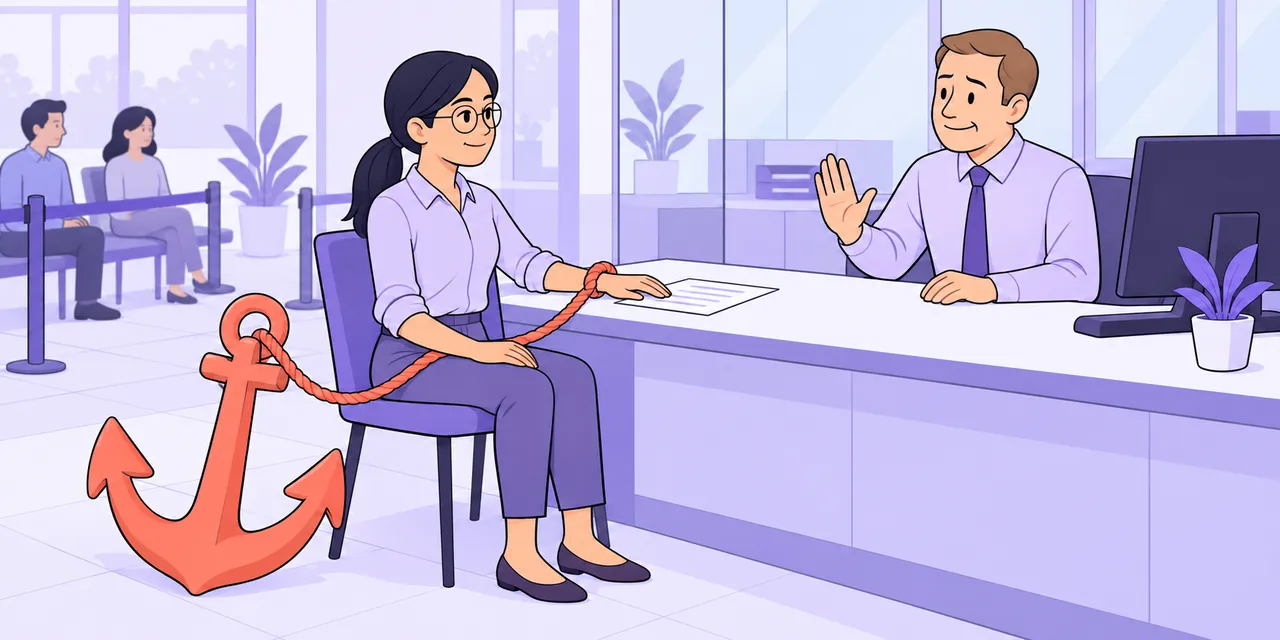
At a bank desk, Jo stays seated while the clerk raises a hand to say no, an anchor tied to her wrist.
How firmGentleFirm

Way 1 · best default

I understand, but

Shows you heard their answer, then repeats what you need. Calm and hard to argue with.

How firmMiddle
ToneNeutral
Use itAnywhere

Examples

I understand, but I'd still like you to look at the full charge.

I understand, but the money was only late because of the bank holiday.

In a conversation

A: I'm sorry, the fee is applied automatically.
B: I understand, but I'd still like you to review it. It was one night.

Common mistake

Not: I demand that you cancel this fee.

Say: I understand, but I'd still like the fee cancelled.

"Demand" sounds like a threat in everyday English. Calm repeating gets you further.

Next: Are you sure there's nothing you can do?

Way 2 · gentle nudge

Are you sure there's nothing you can do?

A soft second try. It asks them to look again for a way to help.

How firmVery gentle
ToneNeutral
Use itAnywhere

Examples

Are you sure there's nothing you can do? I've been a customer for six years.

I know it's late notice, but are you sure there's nothing you can do?

In a conversation

A: I'm afraid we can't refund that.
B: Are you sure there's nothing you can do? It's the first time it's happened.

Next: Could you take another look?

Way 3 · ask them to check

Could you take another look?

You think they've got a detail wrong. You ask them to check again, not to change the rules.

How firmGentle
ToneNeutral
Use itAnywhere

Examples

Could you take another look? That mark was on the check-in inventory.

I've got dated photos. Could you take another look at the cleaning charge?

Next: I don't think that's fair

Way 4 · name the problem

I don't think that's fair

You say clearly that the decision is wrong. Add a reason so it sounds calm, not angry.

How firmFirm
ToneNeutral
Use itAnywhere

Examples

I don't think that's fair. I cleaned the flat properly before I left.

Thirty-five pounds for one night? I don't think that's fair.

Common mistake

Not: I don't agree, remove it.

Say: I don't think that's fair, so could you remove it?

A bare order makes people dig in. Give your view, then ask: it's just as clear.

Next: I can't agree to that

Way 5 · a clear line

I can't agree to that

You refuse their offer or decision. Polite words, but a firm no.

How firmVery firm
ToneFormal
Use itAnywhere

Examples

As it stands, I can't agree to that deduction.

I'm sorry, but I can't agree to that. I've got photos showing the carpet.

In a conversation

A: We'll be keeping three hundred pounds for the carpet.
B: As it stands, I can't agree to that. The mark's on the check-in inventory.

Next: Could I have that in writing?

Way 6 · on the record

Could I have that in writing?

Calm, but it shows you're serious: you want their decision written down so you can take it further.

How firmFirm
ToneNeutral
Use itAnywhere

Examples

OK. Could I have that in writing, with the reason for the fee?

If that's your final answer, could I have that in writing, please?

In a conversation

A: I'm sorry, the fee stays. There's nothing more I can do.
B: OK, thanks for checking. Could I have that in writing, please?

Test yourself: which would you say?
Pick the right one

Which would you say?

Read the moment, then choose the way that fits it best.

Now say it out loud

Pick one and practise it in a real conversation. Save the ones you want to remember.