How to say it · Kind words

Replying when someone says sorry

Someone apologises: for bumping into you, being late, or something bigger. Your reply should fit the size of the problem and let them relax.

5 ways to say it
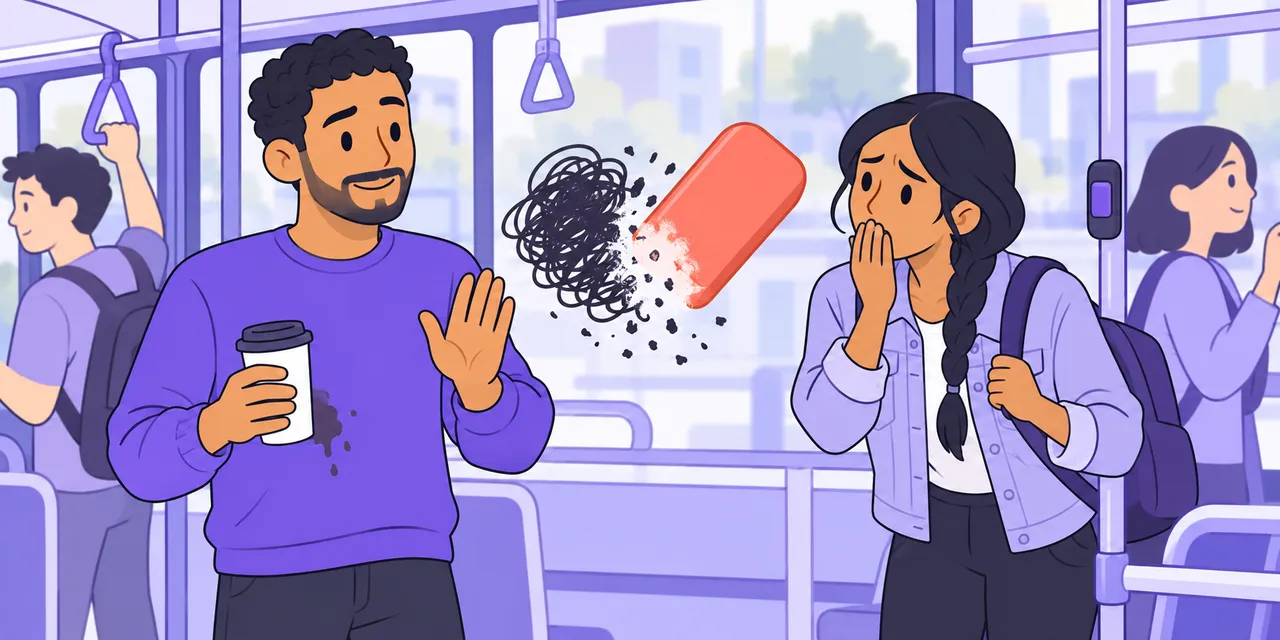
On a bus, Sam waves off a young woman's apology for spilling his coffee while an eraser rubs out a dark scribble.
How generousLightGenerous

Way 1 · best default

Don't worry about it

Kind and clear: it's fine and they can stop feeling bad. Works for small and medium problems.

How generousLight
ToneNeutral
Use itAnywhere

Examples

Don't worry about it. I wasn't waiting long.

"Sorry I forgot your book." "Don't worry about it, bring it next week."

In a conversation

A: I'm so sorry I missed your birthday.
B: Don't worry about it. Let's get dinner this week.

Common mistake

Not: Never mind.

Say: Don't worry about it.

"Never mind" is OK for a tiny problem, but to a real apology it can sound cold, like you've given up on them.
Next: No worries

Way 2 · quick and easy

No worries

Fast and relaxed for very small things: a bump, a short wait, a wrong number.

How generousVery light
ToneCasual
Use itAnywhere

Examples

"Oops, sorry!" "No worries."

No worries, I've only just got here myself.

In a conversation

A: Sorry, was that your foot?
B: No worries!

Next: I appreciate you saying that

Way 3 · real apology

I appreciate you saying that

For a serious apology. You accept it without pretending it didn't matter.

How generousMiddle
ToneNeutral
Use itAnywhere

Examples

Thanks. I appreciate you saying that.

It did hurt, but I appreciate you saying that.

Next: These things happen

Way 4 · shrugging it off

These things happen

Takes the weight off: mistakes are normal and nobody's perfect. Good at work.

How generousGenerous
ToneNeutral
Use itAt work

Examples

These things happen. We'll fix it tomorrow.

"Sorry, I sent the wrong file." "Ah, these things happen."

In a conversation

A: I'm really sorry, I broke one of your glasses.
B: Oh, these things happen. They were cheap anyway.

Next: It's not your fault

Way 5 · taking the blame away

It's not your fault

They're apologising for something they didn't cause. You tell them clearly they're not to blame.

How generousVery generous
ToneNeutral
Use itAnywhere

Examples

Stop apologising. It's not your fault the train was late.

It's not your fault. Nobody could have known.

Common mistake

Not: It's not your mistake.

Say: It's not your fault.

Vietnamese uses one word for both. In English, "fault" means who's to blame; a "mistake" is the wrong thing that was done.

Test yourself: which would you say?
Pick the right one

Which would you say?

Read the moment, then choose the way that fits it best.

The mistake learners make

What a translation app gives you, and what people actually say.

Not: (nodding and saying nothing)

Say: No worries

If you say nothing, people can't tell whether you're still upset. Two quick words let them relax.

Now say it out loud

Pick one and practise it in a real conversation. Save the ones you want to remember.