How to say it · Following the conversation

Asking for clarification

You heard every word, but you're still not sure what they mean. You want to ask without sounding slow or making them feel they explained it badly.

6 ways to say it
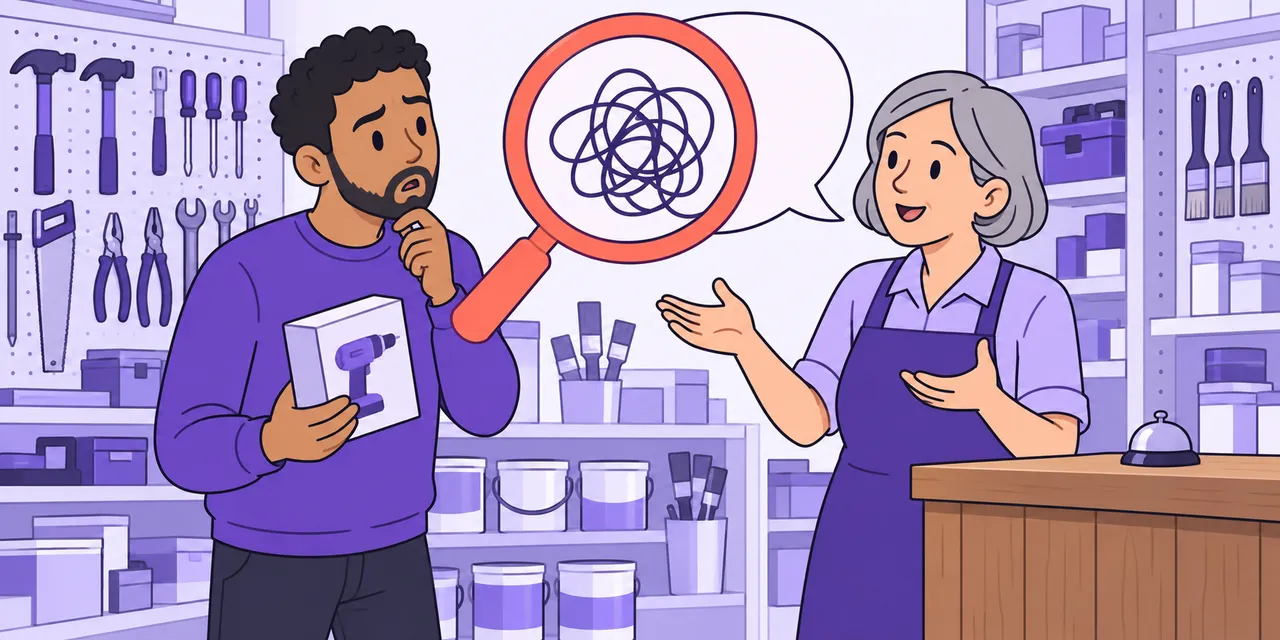
In a hardware shop, Sam holds a magnifying glass up to the assistant's tangled, scribbled speech bubble.
How formalCasualFormal

Way 1 · best default

Sorry, what do you mean?

The everyday way to ask. "Sorry" makes it about you, not about them explaining badly.

How formalCasual
ToneNeutral
Use itAnywhere

Examples

Sorry, what do you mean? Are we not going any more?

"It's sort of complicated." "Sorry, what do you mean?"

In a conversation

A: The flat's fine, it just has a few quirks.
B: Sorry, what do you mean? What kind of quirks?

Common mistake

Not: I don't understand what you say.

Say: Sorry, what do you mean?

The first one sounds like a complaint, and the tense is off. Asking what they mean feels friendlier.


Next: Could you be a bit more specific?

Way 2 · get the details

Could you be a bit more specific?

You understood the idea, but it's too vague to act on. You want the details.

How formalFormal
ToneNeutral
Use itAt work

Examples

Could you be a bit more specific? Which part of the report needs work?

When you say "soon", could you be a bit more specific?

In a conversation

A: We need to tighten things up before the launch.
B: Could you be a bit more specific? Do you mean the budget or the timeline?

Common mistake

Not: Can you explain more clearly?

Say: Could you be a bit more specific?

"More clearly" suggests they explained badly. Asking for detail is just as direct and doesn't blame anyone.

Next: Do you mean

Way 3 · offer a guess

Do you mean

You make a guess and let them say yes or no. Quick, and it shows you were listening.

How formalCasual
ToneNeutral
Use itAnywhere

Examples

Do you mean the meeting on Thursday or the one next week?

Sorry, do you mean the blue folder or the black one?

Next: Just so I understand

Way 4 · say it back

Just so I understand

You repeat the plan in your own words so they can correct you before anything goes wrong.

How formalMiddle
ToneNeutral
Use itAnywhere

Examples

Just so I understand, you want the slides by Monday, not Friday?

OK, just so I understand: we pay now and get the refund later?

In a conversation

A: So the car's ready, but the part you ordered isn't.
B: Just so I understand, I can drive it, but I need to come back next week?

Next: You've lost me

Way 5 · friendly confession

You've lost me

A relaxed, slightly funny way to say you've stopped following the explanation.

How formalVery casual
ToneCasual
Use itWith friends

Examples

Hang on, you've lost me. Who's Dan again?

You lost me at "blockchain", to be honest.

Common mistake

Not: You make me lost.

Say: You've lost me.

In English, the speaker "loses" you. It's a fixed phrase, usually in the present perfect.

Next: Could you clarify that for me?

Way 6 · work-safe formal

Could you clarify that for me?

Polite and professional. Good in emails, with clients, or with anyone you don't know well.

How formalVery formal
ToneFormal
Use itAt work

Examples

The second point in your email isn't clear to me. Could you clarify that for me?

I'm not sure how the fee is calculated. Could you clarify that for me?

Test yourself: which would you say?
Pick the right one

Which would you say?

Read the moment, then choose the way that fits it best.

Now say it out loud

Pick one and practise it in a real conversation. Save the ones you want to remember.