Same verb · different particle

“make” phrasal verbs

Same verb, different particle, different meaning. Learn these 5 one at a time, then test yourself.

5 phrasal verbslisten & quiz

make + for · 1 of 5

make for

move towards a place

  • make for sth/place

to go in the direction of a place, usually with a purpose or intention.

How oftenNow and then
LevelB1
Used inSpeech & writing

Examples

As soon as the bell rang, the students made for the exit.

A: Where did Sarah go?
B: She made for the bus stop as soon as class ended.

Common mistake

Not: We made to the exit.

Say: We made for the exit.

'Make FOR' a place — don't drop 'for', and don't use 'to'.

More on “make for”Another example · Tell it apart · Goes with · Tip

Another example

During emergencies, people often make for the nearest exit to ensure their safety.

Tell it apart

Everyone made for the exits.

  • headed towards them

Everyone made it to the exits.

  • managed to reach them

Goes with

  • make for + place
Practice saying this
Next: make out

make + out · 2 of 5

make out

see or understand with difficulty

  • make out sth

To see, hear, or understand something or someone with difficulty, often because it is unclear or far away.

How oftenCommon
LevelB1
Used inSpeech & writing

Examples

It was so foggy that I could barely make out the road ahead.

A: Can you read what that sign says?
B: Not really, I can't make it out from here.

Common mistake

Not: I couldn't make out of his handwriting.

Say: I couldn't make out his handwriting.

'Make out' takes the object directly — no 'of'.

More on “make out”Another example · Tell it apart · Goes with · Tip

Another example

During the listening test, sometimes the recording isn't very clear, so it's hard to make out every word.

Tell it apart

I could just make out a shape in the fog.

  • barely see it

I could clearly see the shape.

  • see it easily

Goes with

  • make out + faint thing
Practice saying this
Next: make out to

make + out to · 3 of 5

make out to

to write a cheque or official document to someone

  • make out sth to sb

To write someone’s name on a cheque or official document so that they will receive the money or benefit.

How oftenNow and then
LevelB2
Used inSpeech & writing

Examples

Could you make the cheque out to my company, please?

A: Who should I make this cheque out to?
B: Just make it out to Sarah Lee.

Common mistake

Not: Make the cheque out for John Smith.

Say: Make the cheque out to John Smith.

Payee takes 'to'; 'for' is the amount ('make it out for £50').

More on “make out to”Another example · Tell it apart · Goes with · Tip

Another example

If I win the prize, I’d ask them to make the cheque out to my charity so the money goes directly to a good cause.

Tell it apart

Make it out to me.

  • put my name as the payee

Make it out for £50.

  • write that amount

Goes with

  • make a cheque out to
Practice saying this
Next: make up

make + up · 4 of 5

make up

invent (a story, excuse, etc.)

  • make up sth
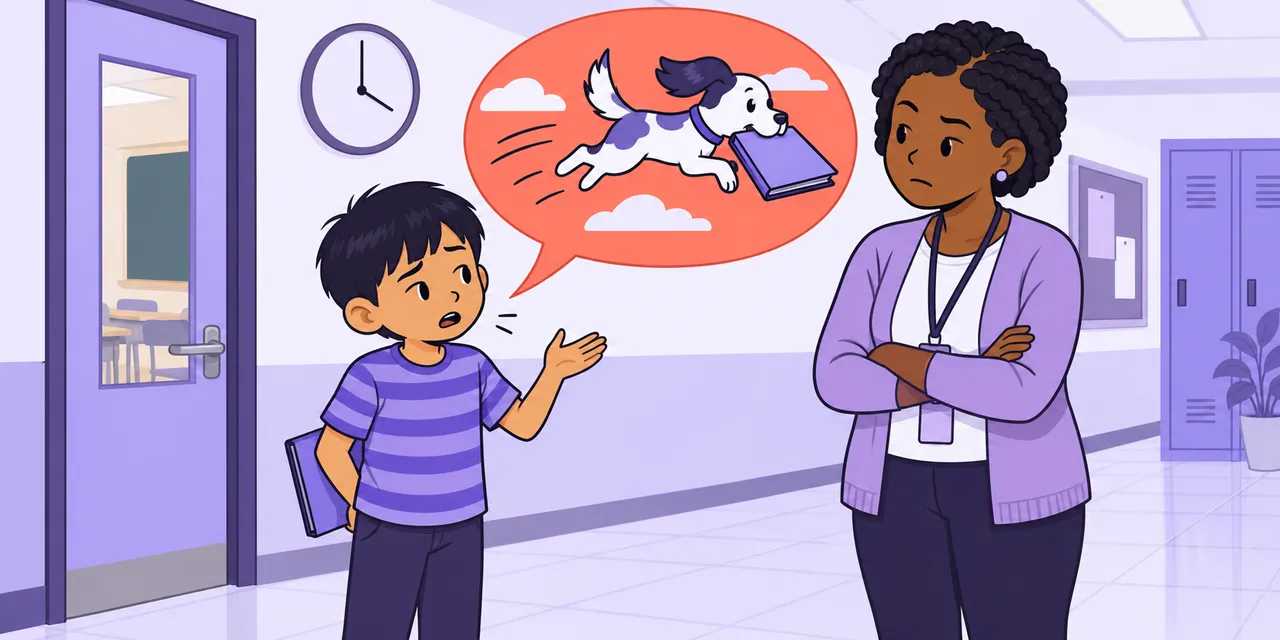
A scene showing “make up” meaning “invent (a story, excuse, etc.)”.

To create something that is not true, such as a story or an excuse.

How oftenCommon
LevelB1
Used inSpeech & writing

Examples

He made up an excuse for being late.

A: Did you really see a celebrity at the café?
B: No, I just made it up.

Common mistake

Not: He made up it.

Say: He made it up.

Separable: 'make up a story' or 'make a story up'; with a pronoun, 'make it up'.

More on “make up”Another example · Tell it apart · Goes with · Tip

Another example

In some situations, people might make up stories to avoid getting into trouble.

Tell it apart

He made up an excuse.

  • invented it — not true

They made up after the row.

  • became friends again

Goes with

  • make up + fiction
Practice saying this
Next: make up for

make + up for · 5 of 5

make up for

to do something to correct a bad situation

  • make up for sth

to do something good or give something to balance out a mistake, loss, or something bad that happened.

How oftenCommon
LevelB1
Used inSpeech & writing

Examples

I brought flowers to make up for forgetting her birthday.

A: Sorry I was late to dinner last night.
B: It's okay, but how are you going to make up for it?

Common mistake

Not: I'll make up my mistake.

Say: I'll make up for my mistake.

'Make up FOR' something — without 'for' it means invent.

More on “make up for”Another example · Tell it apart · Goes with · Tip

Another example

If I miss a class, I always try to make up for it by studying extra at home.

Tell it apart

I'll make up for it next time.

  • compensate / put it right

They made up after the fight.

  • reconciled

Goes with

  • make up for + shortfall
Practice saying this
Test yourself: which “make” fits?
Fill the gap

Which “make” fits?

Read the sentence, then pick the phrasal verb that belongs in the gap.

Turn this into speaking practice

Pick one and say it out loud. Save the ones you mix up.