lose
verbto have something and then not know where it is
Lose = you can't find it: lose your wallet.
Many languages use one word for both. English splits them when you travel: you miss a train, and you lose your keys. (Both verbs have other uses, like miss a friend.)
 Watch the 30-second Short"I Lost the Train" Doesn't Mean What You Think 🚆 | Word Mix-ups (B1–B2)Play
Quick answer
Miss the train: you were too late and it left without you. Lose your keys: you can't find them.
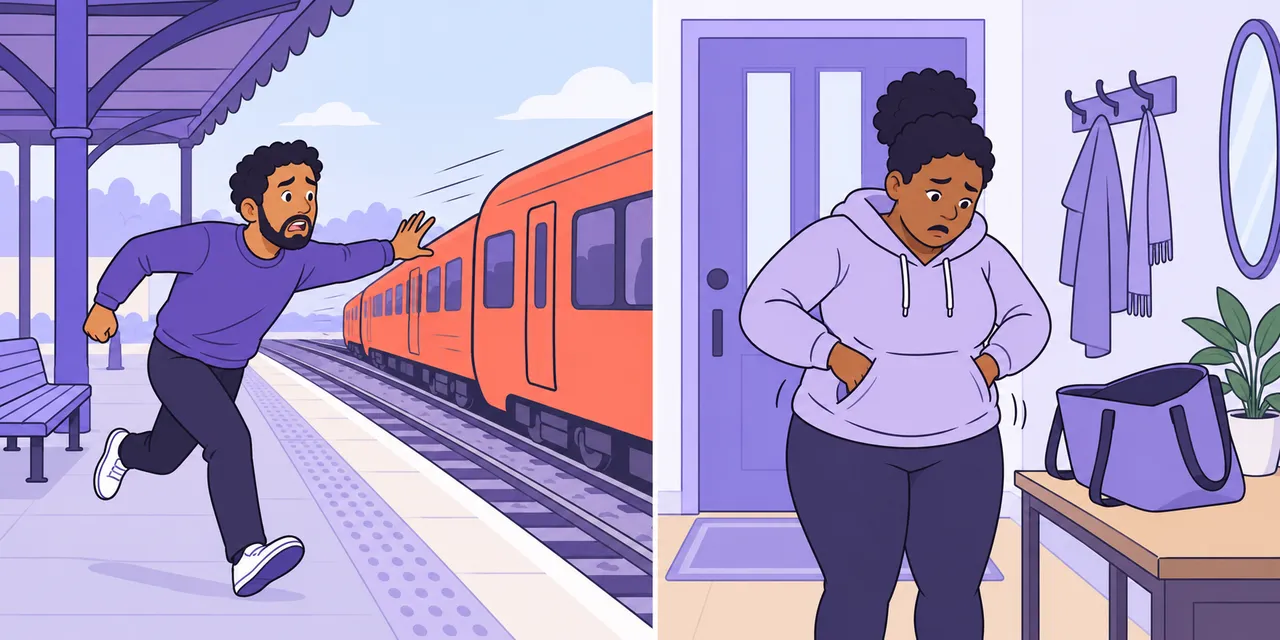
to have something and then not know where it is
Lose = you can't find it: lose your wallet.
to be too late for a train, bus or flight, so it leaves without you
Miss = it left without you: miss the bus.
| Word | Type | Means | Example | Common mistake |
|---|---|---|---|---|
| lose | verb | to have something and then not know where it is | Keep your ticket safe. Don't lose it before we get to the gate. | |
| miss | verb | to be too late for a train, bus or flight, so it leaves without you | Hurry up or we'll miss the train. |
verb
Examples
Keep your ticket safe. Don't lose it before we get to the gate.
I always lose my keys in this bag.
Common mistake
Not: I think I missed my wallet on the train.
Say: I think I lost my wallet on the train.
You had it and now you can't find it, so use lose.
verb
Examples
Hurry up or we'll miss the train.
I missed my flight and had to wait six hours for the next one.
Common mistake
Not: Sorry I'm late! I lost the train.
Say: Sorry I'm late! I missed the train.
Nobody is looking for the train. It left without you, so use miss.
Read the sentence, then choose the word that fits.
"I Lost the Train" Doesn't Mean What You Think 🚆 | Word Mix-ups (B1–B2)
Write or say two sentences, one with each word, in a real conversation.